
 Google AI
 ChatGPT
 Perplexity
The year 2026 brings new hope for real estate investors. The market is finding its footing after years of high rates and a surge in new construction. Experts at the Harvard Joint Center for Housing Studies note that home sales recently hit their lowest level in 30 years. Because of this, more people are renting than ever before. In fact, renters now make up about 80% of new households. This creates a massive opportunity for anyone in multifamily lending.
If you want to grow your portfolio, you need a plan. Getting a loan approved is not just about the numbers on a page. It is about how you tell the story of your property. We use our 30 years of underwriting experience to help you win. Whether you are a new broker or a seasoned pro, the goal is the same. You want to close fast and get the best terms.
Is Your Multifamily Loan Application Strong Enough to Beat the Rush?
The Federal Housing Finance Agency (FHFA) has good news for 2026. They raised the lending caps for Fannie Mae and Freddie Mac to a combined $176 billion. This is a 20% jump from last year. This means there is plenty of money available for the right deals. But since more people are applying, you have to stand out.
A strong application starts with knowing your audience. Lenders in 2026 are very picky. They want to see that you understand the market. Freddie Mac estimates the U.S. still lacks about $3.7 million housing units. Your application should prove how your property fills this gap. If you are doing a fix-and-flip or ground-up construction, you must show you can finish the job.
We act as a “super broker” and correspondent lender. We don’t just pass your papers along. We look at them with the eyes of an underwriter. We help you identify weak spots before a bank does. This saves you time and keeps your reputation clean.
Why Does the Bank Care More About the Building Than Your Salary?
Many new investors worry about their personal income. While your credit matters, multifamily loans are mostly about the asset. Lenders look at how much money the building makes. This is why a DSCR multifamily loan is so popular. It focuses on the property’s cash flow rather than your tax returns.

Learn moer about What is a Multifamily DSCR Loan and How Does It Work?
Understanding the Debt Service Coverage Ratio (DSCR)
The DSCR is the most important number in your application. It shows if the property can pay its own bills. Most lenders require a ratio of 1.20x or higher. This means the building makes 20% more than the loan payment. Here is the simple math:
DSCR ={Net Operating Income (NOI)}/{Annual Debt Service}
To get a high NOI, you need to manage your costs. Harvard research shows that 49% of renters are now “cost-burdened”. They spend more than 30% of their income on rent. Because of this, you must be smart about raising rents. Lenders want to see that your tenants can actually afford to stay.
Balancing the Loan-to-Value (LTV) Ratio
The LTV tells the lender how much risk they are taking. If a building is worth $1 million and you borrow $750,000, your LTV is 75%.
LTV = {Loan Amount}/{Property Value}
Lenders like lower LTVs. It means you have more skin in the game. In 2026, most commercial lenders are looking for an LTV between $75\%$ and $80\%$. If you have a lower LTV, you can often get a better interest rate. This makes your whole deal more profitable.
Can a No Doc Multifamily Loan Scale Your Portfolio Without the Paperwork?
Sometimes you need to move fast. Maybe you don’t want to show years of tax returns. Or maybe you are self-employed, and your paperwork is messy. This is where a no-doc multifamily loan comes in. These loans are “business purpose” only. They don’t look at your W2s or pay stubs.
These loans are perfect for:
- Investors who want to scale quickly.
- People with complex tax situations.
- Short-term rental owners use sites like Airbnb.
Lenders approve these based on the “EasyRent” or “EasyBuild” model. They care about the property’s potential. If the math works, the loan works. This is a great way to handle 1-4-unit properties or even larger 5-10-unit buildings. It removes the “headaches and hurdles” of traditional banking.
Are You Leaving Money on the Table by Skipping a Financial Consultant?
Multifamily finance is complex. You have to choose between bridge loans, hard money, or SBA loans. Each one has different rules. For example, a multifamily bridge loan is great for a “fix and hold” strategy. It gives you quick cash to renovate a property. Once the work is done and the building is full, you can switch to a long-term loan.
Working with a consultant gives you an edge. We offer advice on everything from FHA commercial loans to USDA B&I loans. We even help with “no-doc” and “lite-doc” options. We know that a 21-30 unit building needs a different plan than a small 4-unit property.
We also offer referral programs for brokers. If you are new to the industry, we can help you close your first big deal. If you are experienced, our exclusive programs give you access to private credit that banks can’t reach.
The Three Stages of a Winning Application
To get approved faster, you must be organized. We break the process down into three simple steps. This keeps the lender happy and moves the deal along.

Stage 1: Quick Qualification
You need to show the big picture first. Lenders want to know if the deal is worth their time.
- Trailing 12-Month P&L: A month-by-month look at income and costs.
- Current Rent Roll: Who is living there and what are they paying?.
- Your Bio: A simple resume showing your real estate experience.
Stage 2: The Formal Quote
Once the lender likes the deal, they dig deeper.
- Last 3 Years of Statements: These show the property’s history.
- Property Photos: Lenders want to see “curb appeal” and the condition of the units.
- SREO: A list of other real estate you own. This proves you know what you are doing.
Stage 3: Closing the Deal
This is where the legal work happens.
- Articles of Organization: Documents that show your business entity is real.
- Third-Party Reports: These include the appraisal and environmental checks.
- Management Plan: How will you keep the building running?.
| Document Category | Why It Matters | Speed Factor |
| T-12 P&L | Shows real cash flow. | High |
| Rent Roll | Verifies tenant income. | High |
| SREO | Prove your experience. | Medium |
| Appraisal | Confirms property value. | Essential |
Strategies for Different Asset Sizes
The way you apply changes depends on the building’s size. Small properties (1-4 units) often feel like residential loans. Large properties (5 units and up) are strictly commercial.
For properties with 11-20 units, lenders look closely at your management team. They want to know you aren’t just “winging it.” If you have a 31-40 unit building, they will check your “Net Worth” and “Liquidity.” Usually, your net worth must be at least equal to the loan amount. You should also have about 10% of the loan amount in cash or stocks.
If you are doing ground-up construction, your application needs a “Stabilized Budget.” This is a 12-month plan that shows what the building will earn once it is finished. Yale School of Management experts suggest using “data narrative strategies” to present this. Use charts and graphs to make your plan easier to understand.
You might get interest reading about What Are New-Construction Apartment Loans and How Do They Work?
Is Your Building Ready for the Future?
Sustainability is a big deal in 2026. The Oxford Future of Real Estate Initiative estimates that buildings account for 40% of global carbon emissions. Because of this, “Green Loans” are becoming very popular.
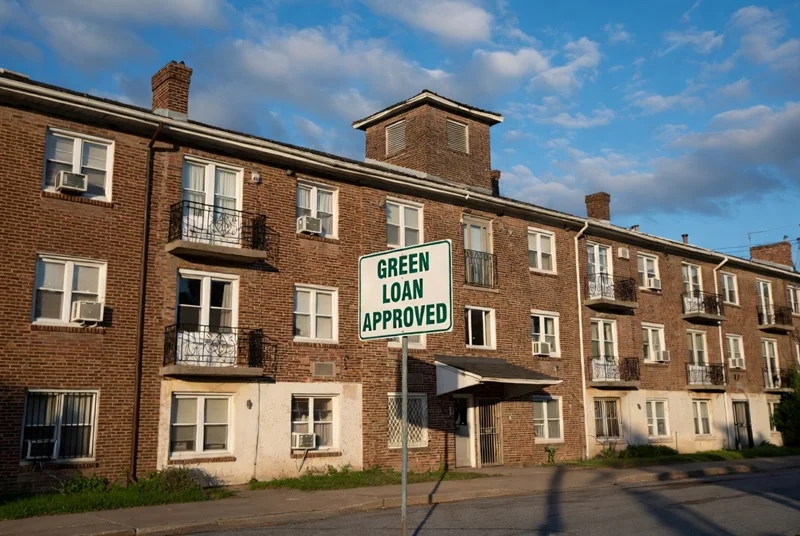
You can use C-PACE financing to pay for energy-efficient upgrades. This includes things like solar panels or better insulation. These upgrades lower your bills and raise your property value. Plus, FHA and HUD programs offer lower insurance premiums for “Green” buildings. The current MIP for these programs is only 0.25%. This saves you a lot of money every month.
How to Avoid Common Pitfalls
Many applications fail because of simple mistakes. We see the same errors over and over again.
- Old Data: Don’t use a rent roll from six months ago. It must be fresh.
- Missing Costs: Don’t forget to include insurance and property taxes in your math. These costs are rising fast.
- Low Reserves: Lenders want to see that you have extra money for repairs.
- Bad “Bad Boy” Clauses: Make sure you understand the “non-recourse” rules. Most loans are non-recourse, but they include carve-outs for certain events, such as an audit.
Summary Checklist for Success
The path to approval is simple if you follow the right steps.
- Check your DSCR: Aim for 1.25x or higher.
- Watch your LTV: Keep it under 80%.
- Pick the right loan: Use a bridge loan for rehab and a term loan for long-term hold.
- Get your papers ready: Have your T-12 and Rent Roll in a digital folder.
- Call a consultant: Use our 30 years of experience to guide you.
The multifamily market is strong because people always need a place to live. Even amid economic changes, the “American Dream” of owning property remains alive. By focusing on “Smarter Operations” and clear data, you can win in 2026. Whether you are doing a “fix and rent” or a massive “ground-up” project, we are here to help.
The housing shortage isn’t going away soon. This means your investment is helping solve a real problem. Every unit you build or fix provides a home for someone. That is a business you can be proud of. Let’s work together to make your next multifamily loan application a success. Reach out to Multifamily Lender today. We will help you navigate the metrics and get the funding you need to grow.
FAQs
Can foreign nationals get a multifamily loan?
Yes. Many multifamily lenders offer financing with a minimum of $ 1 million. You need a U.S.-based LLC and a bank account with 5% of the loan. Most programs offer 30-year terms and up to 80% loan-to-value (LTV).
Is personal income proof always required?
No. A No-Doc multifamily loan relies on property potential instead of tax returns. You do not need to show pay stubs or W-2s. This approach allows you to move quickly in competitive markets and skip typical banking hurdles.
Does the property income determine approval?
Yes. A DSCR multifamily loan uses the building’s cash flow to qualify the borrower. Most lenders want to see a ratio of 1.20x or better. This proves the asset can cover the monthly debt payments on its own.
Is short-term cash available for renovations?
Yes. A multifamily bridge loan provides capital for upgrades or acquisitions. These loans close in as little as seven days. You typically pay interest only while you finish the work and prepare the property for a long-term loan.
Are early payoff fees common in loans?
Yes. Most multifamily lending products include a step-down penalty. A common structure is the 5-4-3-2-1 plan. You pay 5% if you exit in year one. The fee drops each year until it hits zero after the fifth full year.