 Google AI
 ChatGPT
 Perplexity
Starting or expanding a multifamily portfolio is exciting, but securing the right financing can feel like navigating a complex maze. Traditional bank loans often require high down payments and strict reserve requirements, creating a significant hurdle to growth.
Enter the Small Business Administration (SBA). While primarily designed for operating businesses, an SBA loan for rental property can be a game-changer-if you know the specific, strict rules. The complexity of finding the best SBA loans for real estate investors and rental property, and the confusion around SBA loans vs. conventional loans for rental property, are common industry pain points. For example, in Fiscal Year 2025, the SBA approved over 4,200 504 loans totaling nearly $4.82 billion in funding, demonstrating the program’s significant use for fixed assets like real estate (Source: U.S. Small Business Administration, 504 Summary Report).
We are MultifamilyLender.Net, a correspondent and table lender with 30 years of underwriting expertise. We specialize in non-conventional financing and can guide you through this process. This comprehensive guide will cut through the confusion, revealing how to strategically use an SBA loan to acquire, renovate, and expand your rental business.
Demystifying the SBA: Not Your Grandfather’s Loan
The Small Business Administration (SBA) doesn’t directly lend money; instead, it provides a government guarantee on a portion of loans issued by its network of approved lenders (banks, credit unions, etc.). This guarantee reduces the lender’s risk in the event of borrower default, making them more willing to offer more favorable terms- such as lower down payments and more extended repayment periods- than conventional loans. Learn how to qualify for SBA loans even with low borrower net worth.

It is critical to note that SBA loans are designed for operating businesses purchasing real estate for their own use, not for passive real estate investments like traditional apartment buildings. To qualify, your business must occupy at least 51% of an existing property or 60% of a new construction. This distinction is the key to unlocking the maximum SBA loan amount for rental property acquisition where the rental units are secondary to the owner’s primary operating business. In Fiscal Year 2024, the SBA issued over $26.4 billion in 7(a) loans and $5.1 billion in 504 loans, showing the massive scale of these programs (Source: U.S. Small Business Administration, Fiscal Year Reports).
Two Key Programs for Real Estate
The SBA offers two primary programs that can be strategically used for properties that include a rental component alongside an operating business:
The Flexible Financing Powerhouse: Guide to SBA 7(a) Loan for Rental Property Investment
The SBA 7(a) loan is the most common and flexible option, acting as a “catch-all” loan. It can be used for a wide range of business purposes.
- Max Loan Amount: Up to $5 million.
- Use Cases: Purchase of owner-occupied commercial real estate, ground-up construction, refinancing existing debt, and even acquiring working capital for the business. This versatility makes the 7(a) a popular tool.
For Fixed Assets: The SBA 504 Loan for Commercial Rental Property Purchase
The SBA 504 loan is specifically for the acquisition, construction, or renovation of significant fixed assets, like real estate and long-term equipment. It promotes economic development and job creation.
- Max Loan Amount: Up to $5.5 million (depending on the project type, such as manufacturing or “green” projects).
- Structure: It’s a three-party structure: the Third-Party Lender (a bank) covers about 50%, the Certified Development Company (CDC) covers up to 40% (the SBA-guaranteed portion), and the borrower provides a minimum down payment of 10%.
| Feature | SBA 7(a) Loan | SBA 504 Loan |
| Max Loan Amount | $5 million | Up to $5.5 million |
| Term (Real Estate) | Up to 25 years | Up to 25 years |
| Down Payment Range | 10% – 20% | 10% – 20% (typically lower) |
| Loan Type | General Purpose, flexible | Fixed Assets Only (real estate, equipment) |
| Use for Working Capital | Yes (Can be part of the loan) | No (Strictly fixed assets) |
The Golden Rule: Understanding “Owner-Occupied” for Your Multifamily Property
The primary hurdle in securing an SBA loan for rental property is the passive investment catch. The Small Business Administration’s mandate is to support active, job-creating businesses, not to fund speculative or purely passive real estate investments. Therefore, SBA Business loans cannot be used for a property where the borrower’s primary function is simply rent collection-like a non-owner-occupied apartment complex. This distinction is the bedrock of the entire program.
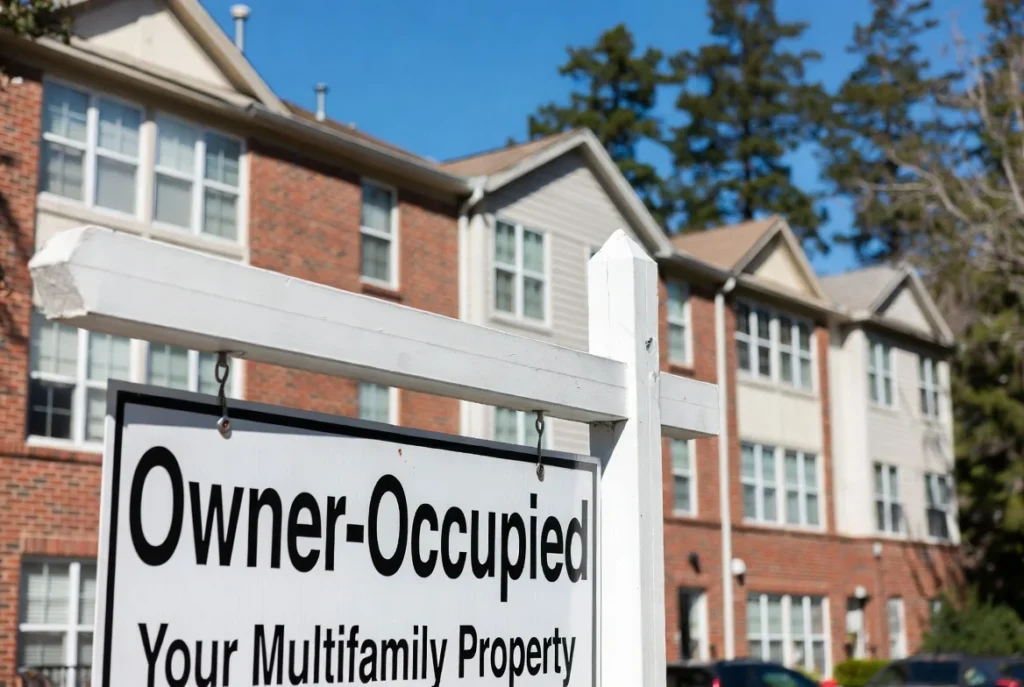
In fact, the SBA’s most recent data shows a continuous focus on financing operating businesses. Top recipients of the 504 loan, which is heavily used for real estate, often include high-occupancy companies such as hotels, restaurants, and medical offices, confirming the owner-occupancy priority (Source: Government Accountability Office report on SBA 504 loans).
What Counts as Owner-Occupied for an SBA Rental Property Loan?
To successfully use an SBA loan to acquire property that includes a rental component, your operating business must meet strict occupancy thresholds:
Existing Property (51% Rule)
For an existing commercial or mixed-use property, the borrower’s operating business must occupy at least 51% of the property’s gross leasable square footage.
- Multifamily Apartment Example: You purchase a 10-unit building. To qualify, your core business- perhaps a property management firm, a commercial cleaning service, or even a specialized residential services company- must occupy over 51% of the building’s floor space. Suppose you run your property management office out of 2,000 square feet in a building with 3,500 square feet of total leasable space (and the rest are rental units). In that case, you meet the 51% threshold, making the entire property eligible. The remaining 49% can generate rental income.
New Construction/Major Renovation (60% Rule)
For ground-up construction or major property renovation projects, the occupancy requirement is higher: the borrower must occupy at least 60% of the space immediately after construction, with a written plan to occupy up to 80% within a specified period, typically one to two years. This higher bar reflects the SBA’s commitment to job creation and expansion.
Can an Individual Get an SBA Loan for Rental Property?
The simple answer for a purely passive investor is no. The loan is made to a legitimate operating business entity (usually an LLC or Corporation) engaged in active commerce, not to a passive individual investor receiving checks.
- Passive Investor: Simply buying a fourplex, hiring a third-party management company, and collecting monthly rent. This is an investment activity, not an operating business.
- Real Estate Operating Company (REOC): This is the qualifier. The business actively manages, operates, maintains, and provides significant services to its tenants, effectively making the property the core operational asset. The legal entity taking the loan must show the financial and staffing structure of an active business.
SBA Loan for Short-Term Rental Property (Airbnb): A Niche Strategy
A niche but effective strategy exists in the short-term rental (STR) space (like a high-end Airbnb operation or a boutique inn). In this case, the business is the short-term rental operation itself, and the property is the core active asset.
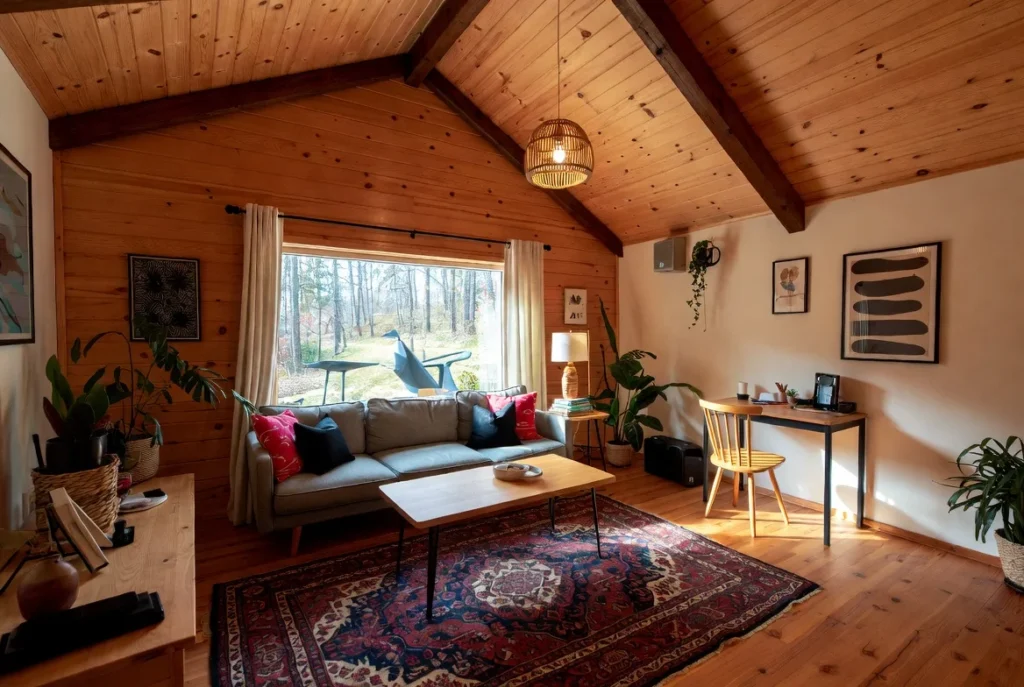
The SBA views a business that provides daily services, housekeeping, guest relations, reservations, and marketing (akin to a hotel or bed-and-breakfast) as a legitimate, active operating entity rather than a passive landlord. Suppose you occupy a small portion (e.g., a manager’s unit or a central office) and the STR operation is the actual business. In that case, this model often qualifies, provided the lender approves the specific use case.
Key Takeaway: The SBA’s focus is on the Active Business Purpose. To secure an SBA loan for real estate investors’ rental property, you must establish a clear, documented, and active business that occupies the requisite square footage and provides services that go well beyond simple rent collection.
When your rental property is truly investment-focused and doesn’t meet these owner-occupancy rules, many borrowers turn to conventional bank loans or private commercial lenders instead. Understanding private vs bank commercial loan differences – such as interest rates, closing speed, flexibility, and qualification criteria – helps you choose the best path for your deal.
Your Qualification Blueprint: Eligibility and Documents Needed
Successfully securing an SBA loan for multi-family rental property hinges entirely on your business’s qualifications and its ability to prove active, owner-occupied use. This is where a robust application package and expert guidance become indispensable.
SBA Loan Eligibility for Multi-Family Rental Property
Your company must first meet the SBA’s fundamental requirements for a small business loan:
The Business
For-Profit Operation: Must be organized as a for-profit entity (e.g., LLC, Corporation) operating legally in the U.S.
Small Business Size Standards: The company must meet the SBA’s definition of “small” for its specific industry (NAICS code). For many commercial real estate activities, this is based on Average Annual Receipts over the latest 5 fiscal years. However, an alternative size standard for the 7(a) and 504 programs also applies:
- Tangible Net Worth must not exceed $20 million.
- Average Net Income (after Federal income taxes, excluding carry-over losses) for the 2 full fiscal years before the application date must not exceed $6.5 million (Source: U.S. Small Business Administration, Inflation Adjustment Rule, effective 2024).
The Borrower
Lenders evaluate the borrower (the business principals) based on the 5 C’s of Credit:
- Credit Score: While the SBA sets no specific personal FICO score floor, lenders typically require an individual score of 650 or higher for 7(a) and 504 loans to increase the chance of approval, though some may accept lower scores if other factors are strong. Lenders will also rely on the FICO Small Business Scoring Service (SBSS) score, which must meet a minimum threshold (currently 155 for loans up to $350,000).
- Character: Clean personal financial history (no recent bankruptcies, foreclosures, or tax liens).
- Capacity (Cash Flow): Proven ability to repay the loan from the operating business’s cash flow, which must adequately cover both the business’s operating expenses and the proposed new debt.
Collateral
SBA policy requires that loans be fully secured when possible. This means the lender will generally take a lien on the real estate being purchased. For a sizable SBA loan for real estate investors’ rental property, the lender may also require liens on other available business and personal assets (including a personal guarantee from all owners with 20% or more equity) to mitigate risk.
SBA Loan Requirements for Long-Term Rental Income
Since the business must be actively operating and generating income beyond passive rent, a strong case must be made through detailed financial planning and documentation:
- Robust Business Plan: This must clearly outline the company’s active role, management structure, and provide a convincing Owner-Occupancy Justification (51% or 60% rule). The plan must detail how the non-rental portion of the property supports the primary operation and meet SBA loan requirements for long-term rental income by demonstrating how that income contributes to overall capacity without being the sole revenue stream.
- Management Experience: Lenders want assurance that the ownership team has relevant experience managing the type of active business operation proposed (e.g., specialized real estate management, boutique hotel operations, etc.).
Documents Needed for SBA Rental Property Loan Application
Prepare a meticulous loan package to accelerate the process:
Business Financials:
- Business Tax Returns (3 years)
- Current Interim Financial Statements (P&L, Balance Sheet)
- Business Debt Schedule
Personal Financials:
- Personal Tax Returns (3 years)
- Personal Financial Statement (SBA Form 413)
- Resumes for all principal owners
Real Estate Documentation:
- Purchase Agreement or Contract
- Independent Real Estate Appraisal
- Environmental Reports (Phase I)
- Tenant/Lease Schedules (for the non-owner-occupied portion)
- Project Cost Estimates (for construction/renovation)
Compliance:
- Business Legal Documents (Articles of Organization, Operating Agreement)
- Detailed Written Justification of Owner-Occupancy (51%/60% Rule)
How to Get an SBA Loan for Residential Rental Property: Your Step-by-Step Guide
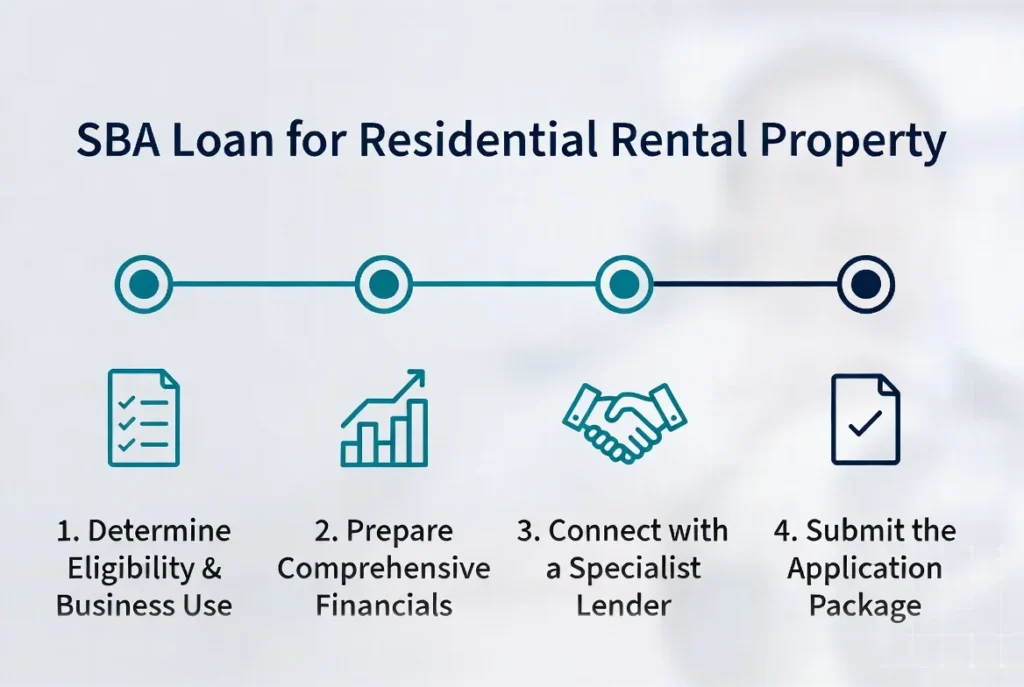
- Determine Eligibility & Business Use: Confirm that your operating business meets the size standards and, most crucially, that the property will meet the 51% owner-occupancy rule. Structure your business plan around this active use.
- Prepare Comprehensive Financials: Gather all necessary documents, ensuring your financial statements are up-to-date and clearly demonstrate sufficient cash flow (debt service coverage) to handle the proposed debt.
- Connect with a Specialist Lender: SBA loans, particularly those for mixed-use properties, are complex. Engage a lender, like MultifamilyLender.Net, that is a preferred SBA lender and has 30 years of underwriting expertise in non-conventional financing. A specialist can structure the deal to meet SBA guidelines.
- Submit the Application Package: Work with your lender to submit a complete and cohesive package. Missing or inconsistent information is the single most significant cause of delays.
- The Underwriting Process: Your chosen lender’s experienced underwriter will scrutinize the application, verify the owner-occupancy requirements, confirm the valuation (appraisal), and analyze the projected cash flow to approve the loan and secure the SBA guarantee.
More Than Just Buying: Strategic Uses and Loan Comparisons
The unique structure of the SBA loan programs- especially the low equity requirement and long terms—makes them highly strategic tools for real estate investors who can successfully integrate an active operating business.
Pros and Cons of Using an SBA Loan for Rental Units
| Feature | Pros (Pleasure Points) | Cons (Pain Points) |
| Down Payment | Low Down Payment (10-20%): Significantly preserves capital compared to conventional loans (often 25-35%). | Fees: SBA guarantee fees (up to 3.5% on the guaranteed portion of 7(a)) and closing costs can be substantial. |
| Terms & Rates | Long Terms (up to 25 years): Provides predictable, low monthly payments and better cash flow management. | Strict Owner-Occupancy Rule: Must use 51% (existing) or 60% (new) of the space for your business, restricting true investment flexibility. |
| Capital Use | Can Finance Renovations: Loans cover ground-up construction and significant renovations and can include fixed equipment costs. | Personal Guarantee Required: All owners with ≥20% equity must provide a full personal guarantee. |
| Process | Competitive Rates: Rates are capped by the SBA to ensure fairness. | Lengthy Application Process: Requires extensive paperwork and can take 30 to 90 days for funding. |
Can I Use an SBA Loan to Refinance Rental Property?
Yes, the SBA 504 Debt Refinancing Program is explicitly designed for this, provided the asset is owner-occupied. You can use a 504 refinance to:
- Refinance Qualified Debt: Refinance existing commercial real estate debt, machinery, or equipment that was previously incurred for an eligible fixed asset purchase and is secured by the property. The debt must have been incurred at least six months prior to the refinance application, and the property must currently be at least 51% owner-occupied.
- Cash-Out for Eligible Expenses: Under the “refinancing with eligible business expenses” option, you may be able to cash out up to 20% of the property’s appraised value to use for working capital, accounts payable, inventory, or other eligible business needs.
Refinancing existing debt to reduce variable rates to the fixed, low rates of the 504 program can dramatically improve business solvency.
SBA Loan vs Conventional Loan for Rental Property: When to Choose Which
The choice between an SBA loan and a conventional loan for rental property comes down to risk, speed, and capital requirements.
- SBA Loan: Best for businesses that need low down payments, long terms, or to finance major construction/equipment while occupying a portion. SBA loans are essential when traditional banks are unwilling to lend without a government guarantee due to the business’s young age or lack of collateral.
- Conventional Commercial Loan: Better if your business has strong existing financials and can afford a higher down payment (25-35%). These loans usually close faster (30-60 days) and have fewer collateral restrictions.
- DSCR Loan (Debt Service Coverage Ratio): Best for pure investment properties (non-owner-occupied multifamily) where qualification is based solely on the property’s cash flow, not the borrower’s personal income or business operations. These loans are quicker but usually come with higher rates and shorter amortization periods.
| Loan Type | Down Payment Range | Owner-Occupancy Rule | Max Term (Real Estate) | Funding Speed |
| SBA 7(a) / 504 | 10% – 20% (Saves Cash) | MANDATORY (51% minimum) | Up to 25 Years | Slow (60-90+ days) |
| Conventional Commercial | 25% – 35% (Higher Equity) | No Requirement | 5 – 10 Years (often with balloon) | Medium (30-60 days) |
| DSCR Loan | 20% – 25% | No Requirement | 30 Years (Amortization) | Fast (20-45 days) |
If your rental property doesn’t meet the SBA’s strict owner-occupancy requirements (51% or 60% rule) or you’re looking for faster, more flexible commercial financing options, our best commercial loan referral program can quickly connect you with the right lenders for conventional loans, DSCR loans, bridge financing, and other multifamily solutions.
Case Study Example: The Strategic 504 Acquisition
Imagine a client, Alpha Property Management (Alpha PM), based in Sacramento, California (a high-growth metropolitan area). Alpha PM decides to acquire a 20-unit building valued at $4.5 million. The existing zoning allows for a large ground-floor office space and 19 rental apartments above.
- Strategy: Alpha PM uses an SBA 504 loan to finance the acquisition.
- Owner-Occupancy: Alpha PM, the operating business, occupies the 2,500-square-foot ground-floor office (55% of the total leasable square footage) to run its management operations for its entire portfolio. This meets the 51% rule.
- Financing: The project cost is structured as 50% from a bank (first mortgage), 40% from the CDC/SBA (second mortgage), and 10% (or $450,000) in equity from Alpha PM.
- Result: The business secured low-down-payment, fixed-rate financing for 25 years, while the majority of the property (the 19 apartments) generates long-term, passive income, subsidizing the firm’s occupancy costs. This is a classic example of using the SBA to leverage equity into a blended real estate asset.
Ready to Leverage the Power of the SBA?
The SBA loan programs are undeniably powerful tools for multifamily real estate investors, provided the strict owner-occupancy rule is met. By combining an active operating business with real estate acquisition, you unlock exceptional financial advantages: industry-leading low down payments (often just 10%) and extended repayment terms of up to 25 years. These features are difficult, if not impossible, to achieve with conventional financing. In the last fiscal year, the SBA continued its support for these fixed-asset acquisitions, with the 504 loan portion offering highly competitive long-term fixed rates consistently below 6.00% for the 25-year term through the latter half of 2025 (Source: U.S. Small Business Administration/Certified Development Company data).
The details matter. Navigating the SBA’s complex rules—from proving active business income to documenting the 51% occupancy requirement- requires experienced guidance. As a correspondent and table lender specializing in creative solutions like bridge loans, DSCR loans, and SBA programs, we provide the expertise to structure your deal for success from the outset.
We offer exclusive value by connecting you with our proprietary network of over 1,000 investors and brokers, ensuring you access the best possible rates and terms for your unique project.
Don’t leave capital on the table. Contact MultifamilyLender.Net today for a free financial consultation and let our 30 years of underwriting experience work for you. Start building your legacy in multifamily real estate with a clear economic advantage.
Contact us for a free financial consultation and let our experienced team guide you.
FAQs
1. Do SBA Loans Have Prepayment Penalties?
Yes, they do, but the rules differ significantly between the two programs:
- SBA 7(a) Loans: A prepayment penalty only applies if the loan term is 15 years or longer and you voluntarily prepay 25% or more of the outstanding balance within the first three years. The penalty is a declining percentage of the amount prepaid: 5% in Year 1, 3% in Year 2, and 1% in Year 3.
- SBA 504 Loans: A penalty is always included, typically lasting for the first 10 years of a 20 or 25-year term. The penalty is calculated based on the debenture’s interest rate (the SBA portion of the loan) and declines each year. This is a crucial consideration if you plan to sell the property quickly.
2. Can the Rental Income from the Non-Occupied Portion be Used to Qualify for the Loan?
Yes, but with caveats. For a mixed-use property (owner-occupied by your business), the lender will primarily assess the operating business’s cash flow (Capacity). However, they can use the rental income from the non-occupied units (up to 49% or 40% of the space) to strengthen the overall debt service coverage ratio (DSCR). The core business must still demonstrate the ability to cover the debt, and the rental income is seen as supplementary support.
3. Can I Use an SBA Loan to Finance Interior Tenant Improvements for Leased Space?
Generally, no, not with the SBA 504 loan.
The SBA 504 program is strictly for fixed assets. It prohibits using loan proceeds to build out or remodel interior space specifically for a non-affiliated tenant (the rental portion). The funds must be used to cover costs integral to the building’s structure and to support the owner-occupied business (e.g., roof, HVAC, common-area upgrades). The more flexible SBA 7(a) loan may allow for specific leasehold improvements. However, they must still primarily benefit the borrower’s operating business.
4. What Happens to the SBA Loan if I Sell the Property or Business?
If you sell the real estate or the business that holds the loan, the SBA loan must typically be paid off in full at closing using the sale proceeds. The exception is if the buyer qualifies and the lender/SBA approves the assumption of the existing SBA loan, which is possible but relatively rare. Since the sale triggers an early payoff, you may incur the prepayment penalty discussed above, depending on the timing.
5. What are the Maximum Interest Rate Spreads (Caps) on an SBA 7(a) Loan?
The interest rate for an SBA 7(a) loan is variable (though fixed options exist) and is tied to a base rate (either the Prime Rate, LIBOR, or a fixed rate). The SBA caps the amount a lender can add to the base rate- the maximum allowable spread. For loans over $50,000, the maximum spread is typically 2.25% to 3.00% (Prime Rate plus the allowable spread), helping keep SBA rates competitive with many conventional commercial loans.