
 Google AI
 ChatGPT
 Perplexity
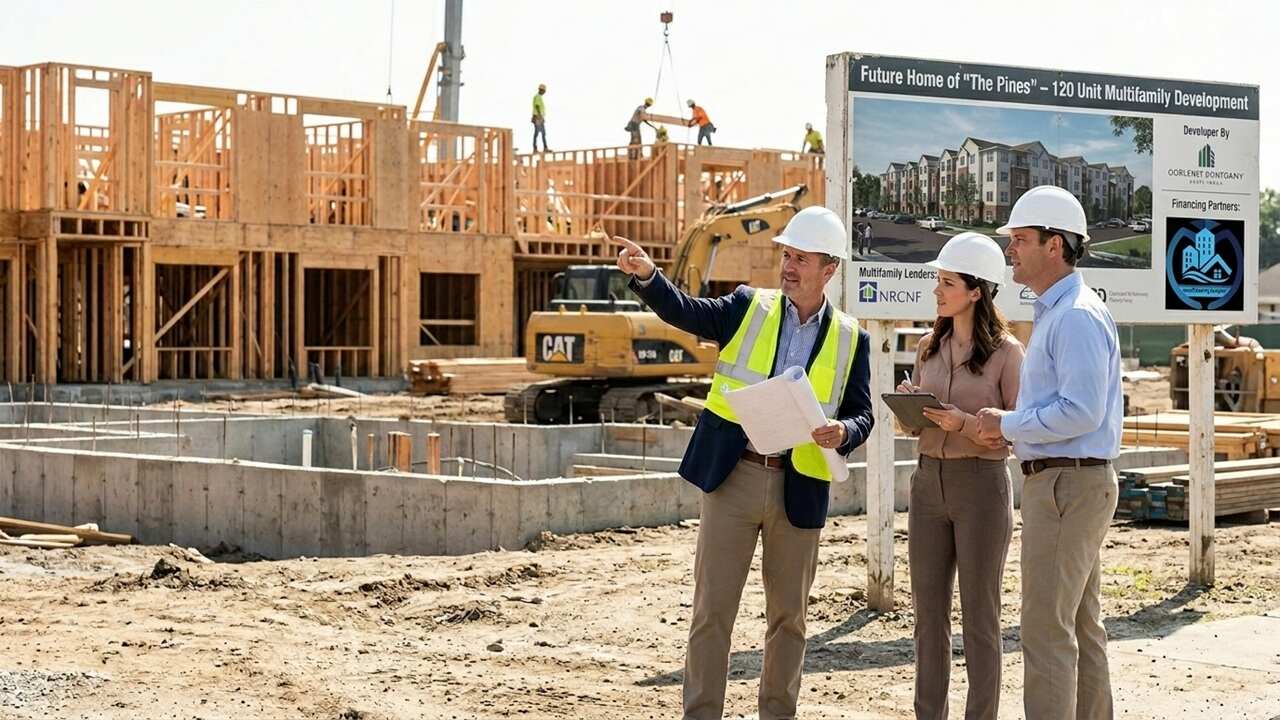
You want to build a new apartment complex. You have a great site and a solid vision. Yet, when you walk into a traditional bank, they hand you a mountain of paperwork. They take months to review your file. Often, they say no before they even look at your numbers.
Slow review times can kill your deals. Shovel-ready land sits idle while your carry costs rise. If you want to build a property from scratch, securing ground-up construction loans for multifamily projects is the first major hurdle you must clear.
Why is building new housing so hard today?
The market has a massive housing shortage. Freddie Mac reports that the United States has a deficit of roughly 3.7 million housing units. At the same time, young adults are entering the housing market in record numbers. They need places to live. Buying a home is too expensive for many families right now, so they choose to rent.
This high demand among renters creates a huge opportunity for you. You can build apartments, townhomes, or smaller rental units to fill this gap. You just need a reliable financial partner who understands your business. That is where Multifamily Lender comes in. We offer financial consulting and direct lending services, backed by 30 years of underwriting experience. We help you move past bank red tape and get your project funded.
Understanding the Multifamily Landscape (By the Numbers)
The national apartment market is going through a massive shift. The United States now has about 20.7 million apartment units spread across 433,000 buildings. High supply over the last three years pushed the national vacancy rate to 8.6%. This is the highest vacancy rate we have seen since the post-financial-crisis recovery.
What do the latest housing statistics tell us?
The tide is turning quickly. Housing starts have plummeted to their lowest level in a decade due to high capital costs. The National Association of Home Builders reports that multifamily starts will fall to 392,000 units this year. This means we will face a major shortage of apartments in the coming years.
| Market Indicator | Current Metric | Long-Term Trend | Source |
| National Vacancy Rate | 8.6% | Expected to drop as supply thins | MMCG database |
| Housing starts | 392,000 | Down 5% from previous year | NAHB |
| Post-2020 Cost Increase | 39% | Driven by labor and material spikes | MMCG database |
| Renter Cost Burden | 50% | Half of US renters spend over 30% on rent | Forbes |
| Structural Housing Deficit | 3.7 million units | Underpins long-term rental demand | Freddie Mac / Forbes |
Building costs have also spiked. The MMCG database shows that construction costs have risen 39% since 2020. This is nearly double the rate of general inflation over the same period. You must manage your budget with extreme care.
The Harvard Joint Center for Housing Studies (JCHS) points out that renter incomes have risen only 9% since 2001, while rents have risen 30%. High-income renter households making over $75,000 increased by 1.7 million between 2021 and 2024. This means a growing pool of renters can afford higher-quality units.
Selecting the Right Multifamily Construction Lenders
You cannot build without the right financial partner. Different multifamily construction lenders have different rules, rates, and leverage limits. Some lenders require you to sign personal guarantees. Others let you walk away if the project fails.

How do you choose between recourse and non-recourse debt?
A recourse loan means you are personally on the hook. If your project defaults, the lender can take your personal bank accounts and properties. Non-recourse loans are different. The lender can only seize the property itself if you default.
Our team at Multifamily Lender connects you with a network of over 200+ private lenders and investors. We look at your deal to find the perfect fit.
| Lender Type | Max LTC | Typical Loan Term | Recourse Requirement | Key Advantage |
| HUD / FHA | Up to 90% | 40 years (fully fixed) | Non-Recourse | Lowest rates, longest terms |
| National Bank | Up to 75% | 24 to 36 months | Recourse | Highly flexible relationship lending |
| Regional Bank | Up to 75% | 24 months | Recourse | Strong local market knowledge |
| Private Debt Fund | Up to 75% | 12 to 24 months | Non-Recourse | Fast approvals and closings |
HUD lenders offer amazing terms, but they can take nine to ten months to close. National and regional banks close faster, but they usually require personal recourse. Private debt funds close within days, but they charge higher interest rates. We help you weigh these options to pick the best path.
Comparing Multifamily Construction Loan Rates and Structures
Pricing is a moving target. Current multifamily construction loan rates vary based on the lender you choose and the strength of your project. Most private and bank lenders tie their rates to the Secured Overnight Financing Rate (SOFR).
When you build, interest rates on construction loans can change your entire budget. Floating-rate loans adjust every month. If rates rise during your build, your monthly payments will jump. This is why many lenders require you to buy an interest rate cap.
| Loan Option | Interest Rate Range | Underlying Index | Amortization |
| HUD 221(d)(4) | 5.72% to 6.22% | 10-Year Treasury | 40 Years |
| National Bank | 6.14% to 6.75% | SOFR + Spreads | Rolls to Permanent |
| Regional Bank | 7.75% to 8.00% | SOFR + Spreads | Interest-Only |
| Private Debt Fund | 8.64% to 9.00% | SOFR + Spreads | Interest-Only |
The HUD 221(d)(4) program locks in a low rate before construction starts. This rate stays the same during the build phase and the 40-year permanent loan. It protects you from rate spikes. If you use a bank or private loan, you will pay interest-only during the build phase. You will need a takeout loan to pay off the debt once the building is stable.
Getting ground-up construction loans for multifamily: A 10-Step Blueprint
Getting your project funded does not have to be a headache. You can win with a clear, step-by-step plan. Here is the blueprint we use to fund developers.

Step 1: Secure the Proposed Development Site and Confirm Zoning
You must control the land before a lender will take you seriously. You can show control through a signed purchase contract or a deed. Make sure the local city zoning allows you to build multi-unit properties.
Lenders will not approve your loan if you have to fight for zoning changes. If you already own the land free and clear, that is a huge win. Under FHA and private lender guidelines, your land value counts as equity. You can use this equity as your down payment, which saves your cash for actual building costs.
Step 2: Establish a Feasible Financial Proforma and Project Scope
A proforma is a financial preview of your build. It is a spreadsheet that shows all your expected costs and income. You must list every line item, including land cost, building materials, permits, and loan fees.
Your proforma must also show the rents you expect to collect after stabilization. Lenders look at this to verify your Debt Service Coverage Ratio (DSCR). They want to see a DSCR of 1.25x or higher. This proves your rental income will easily cover the permanent mortgage payments.
Step 3: Partner with Qualified Capital Advisors
Finding the right financing on your own takes time. You have to call dozens of lenders and pitch your deal over and over. Working with an expert advisor like Multifamily Lender simplifies this process.
We use our 30 years of underwriting expertise to structure your capital stack. We present your deal to our network of 200+ investors and private lenders. This gets you multiple competitive offers without the stress.
Step 4: Finalize the Stamped Architectural Blueprints
Lenders do not fund ideas; they fund plans. You must hire a licensed architect to create complete, stamped building plans. Lenders will hire an independent engineer to review these blueprints.
These blueprints also help the appraiser. Since the building does not yet exist, the appraiser uses your plans to estimate the property’s future value. Detailed plans lead to a more accurate appraisal.
Step 5: Secure Comprehensive Builder Risk Insurance and Permits
You must protect your project from disasters. Lenders require builder’s risk insurance to cover fire, wind, and theft during construction.
You also need your local building permits. You cannot break ground without them. Yet, you do not have to wait for final permits to start talking to us. We can issue a conditional loan approval while your permits are still in progress.
Step 6: Analyze and Lock in Competitive Multifamily Construction Loan Rates
Once your plans are ready, we look at the numbers. We negotiate with lenders to get the best multifamily construction loan rates for your deal. Even a small difference in rates can save you thousands of dollars over a multi-year build.
If you choose a program like HUD, we can lock your rate before construction begins. If you use a bank or reliable private lender, we help you negotiate a rate cap to keep your costs predictable.
You may also like this article How to Submit a Strong Multifamily Loan Application and Get Approved Faster!
Step 7: Manage Short-Term Construction Loans Interest Rates and Reserves
Ground-up builds do not produce rent money while you are pouring concrete. Because of this, you must cover your monthly loan payments out of pocket. Lenders solve this by requiring an interest reserve account.
This reserve is funded directly from your loan at closing. It pays your monthly interest during the build. When construction loans have floating interest rates, a rate spike can eat up your reserve faster than expected. We model these risks early to ensure your reserve is large enough to handle any rate hikes.
Step 8: Build the Underwriting Package with Complete Documentation
Your underwriting package is your pitch book. It must look professional and contain all your key documents.
You will need your land deed, line-item budget, blueprints, and sponsor resumes. Lenders want to see that you or your general contractor has built similar projects before. If you are new to the business, we can help you find an experienced partner to strengthen your application.
| Necessary Document | Target Detail / Target Goal | Why Lenders Require It |
| Land Purchase Contract | Signed and executed | Proves site control and acquisition price |
| Line-Item Budget | Hard and soft costs with 10% contingency | Prevents cash shortages mid-build |
| Stamped Blueprints | Complete architectural set | Used by appraisers to determine completed value |
| Sponsor Balance Sheet | Net worth and liquid cash details | Verifies you meet lender cash reserve rules |
| Contractor Resume | 2+ years of multi-unit build history | Reduces construction mistake risks |
| Zoning Approvals | City certificates | Proves the build complies with local law |
Step 9: Establish a Seamless Construction Draw Schedule
Lenders do not write you a check for the full loan amount on day one. They release the money in stages called draws.
Your general contractor completes a stage of work, like the foundation or framing. An inspector visits the site to verify the work. Once verified, the lender releases the funds for that stage. Slow draw schedules can stall your project. Subcontractors will walk off the job if they are not paid on time. We connect you with lenders who process draws in days, not weeks.
Step 10: Formulate a Proven Takeout and Exit Strategy
Construction loans are short-term solutions. Most last only 12 to 36 months. You must have a clear plan to pay off the loan when the build is complete.
Your exit strategy will usually be to sell the finished property or refinance into a long-term mortgage. If you plan to keep the property, we can help you transition into a long-term DSCR or term loan.
Tailoring Capital Solutions by Property Size and Strategy
Your loan structure depends heavily on your project’s scale. A small duplex has very different lending rules than a large 40-unit building.
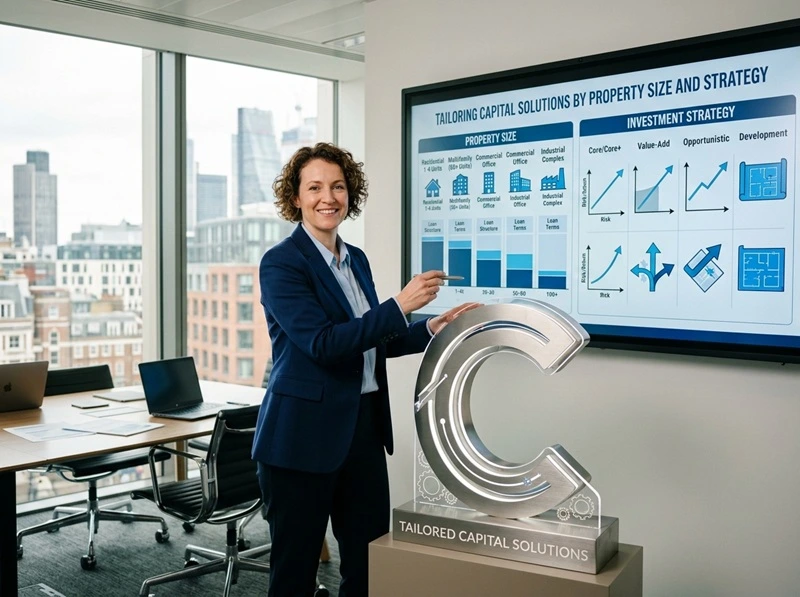
What is the best strategy for your specific property size?
For 1 to 4 units, you can use residential loan programs like FHA 203(b). These require as little as 3.5% down, and the rules are simpler. You must live in one of the units for at least a year to qualify.
Once you hit 5 units, you enter the commercial space. Commercial deals require different underwriting standards.
- 5 to 10 Units: Great for value-add or rebuild strategies. Lenders focus heavily on the property’s rental income.
- 11 to 20 Units: Perfect for fix-and-hold projects. You can use bridge loans for the build, then roll into a long-term mortgage.
- 21 to 30 Units: These communities require highly experienced contractors. Lenders look closely at your contractor’s track record.
- 31 to 40+ Units: These large projects require deep capital stacks. You can combine private debt, builder equity, and permanent takeout loans.
The strategy you choose matters too. Ground-up builds require draw-based construction loans. If you are doing renovations, rebuilds, fix-and-flips, or fix-and-rents, you might be better off with a shorter-term rehab or bridge loan.
Navigating Specialized Loan Types with MultifamilyLender.Net
We know that every developer’s financial situation is unique. That is why we offer a wide variety of loan programs.
If you want high leverage and low rates, we can guide you toward FHA commercial property investment loans. These loans offer up to 87% loan-to-cost for market-rate projects. They are non-recourse, meaning your personal assets stay safe.
If you are building in a rural area, we can look at USDA commercial loan programs. These programs work with private lenders to fund affordable rental units for low-income families. We also offer SBA loans for properties where you plan to run your own business.
We have great options for developers who want to skip the paperwork. Our no-doc and lite-doc loan programs do not require personal tax returns. Instead, we base our underwriting on the property’s cash flow potential. This is a game-changer for self-employed developers who show low net income on their tax returns.
Mitigating Critical Development Pitfalls
Ground-up building is exciting, but it has plenty of landmines. You must avoid three big mistakes to protect your profits.
First, do not under-budget your costs. Material prices can jump unexpectedly. Always include a 5% to 10% contingency reserve in your budget to handle surprises.
Second, do not ignore local market comps. If your finished units are more expensive than similar properties nearby, you will struggle to rent them. Work with local real estate agents to verify your completed value before you start building.
Third, do not wait for permits to secure your financing. Waiting until your permits are clear to start looking for a loan is a massive waste of time. You can secure conditional loan approval with us early on, so you can start building as soon as your permits are ready.
Strategic Advisory and Broker Referral Programs
Securing financing for a new build takes experience, focus, and a great network. This is exactly what we offer at Multifamily Lender. With 30 years of underwriting experience, we help you design a capital stack that protects your cash flow and gets your project completed.
We also support the broker community. We offer both exclusive and non-exclusive referral programs for brokers. Whether you are a seasoned broker or new to the commercial space, we welcome your business. We help you package and structure your clients’ deals so they get funded quickly, and you earn competitive referral fees.
Are you ready to turn your blueprints into reality? Schedule a consultation with our underwriting team today. Let us review your proforma and match your project with the perfect lender. This is how we help you secure ground-up construction loans for multifamily projects with ease and confidence.
FAQs
Do multifamily construction loans have prepayment penalties?
Yes, most of these loans carry step-down prepayment penalties. Lenders charge these fees to protect their projected interest earnings. The penalty percentage slowly declines over the life of your loan if you decide to pay it off early.
Can you tear down structures to rebuild?
Yes, lenders allow you to demolish existing buildings on your site. You can easily include these demolition expenses in your overall construction budget. This proven strategy helps you clear the land and prepare for your new multifamily project.
Can you finance furniture and equipment?
Yes, certain programs allow you to fund furniture, fixtures, and equipment. You can roll these secondary costs directly into your primary construction loan. This option keeps your cash free for other vital parts of your apartment project.
Is a two-closing construction transaction possible?
Yes, you can choose a two-closing loan structure if your build takes too long. This setup lets you finance construction overruns. You will pay off the initial builder and close on your permanent home mortgage as a separate step.
Can you build apartments near oil wells?
No, standard government construction loans do not permit building near active oil or gas wells. Lenders enforce these strict safety rules to protect future tenants. You must choose a clean, hazard-free site to pass your mandatory FHA appraisal.